Built with the people who teach on it.
Annoto is shaped every day by the educators, instructional designers, and institutions who use it. Their classroom needs drive what we build.
Learn more: We exist to turn passive video into active learning
We exist to turn passive video into active learning
Video became the dominant medium of education almost by accident — lecture capture here, a flipped classroom there, then suddenly entire degrees delivered through a player. But the player never changed. It still assumes a silent, solitary viewer, and it tells instructors nothing about what happened on the other side of the screen. Annoto was founded to change that assumption: to make the video itself a place where a class can think together.
Our mission
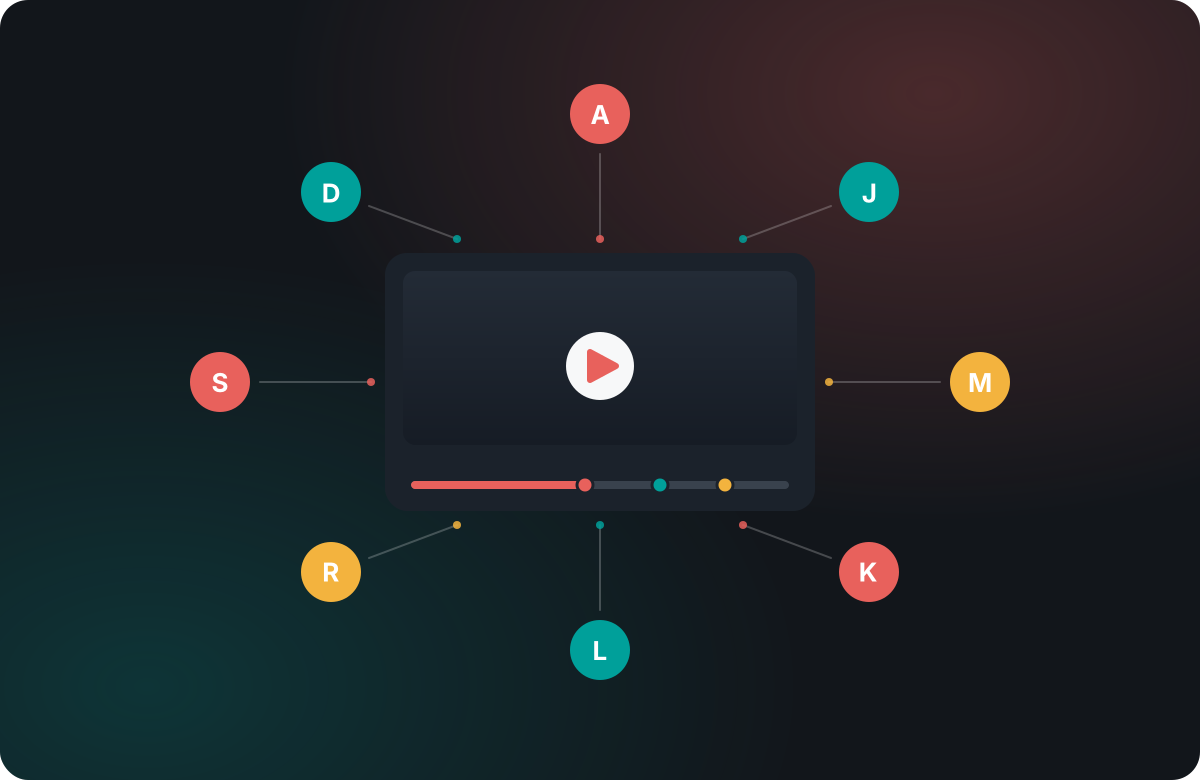
We believe watching should never be the whole assignment. Our mission is to transform passive video into active, social, measurable learning — where students ask questions at the exact moment confusion begins, where instructors see comprehension forming in real time, and where no learner works through a course feeling alone. Every product decision is tested against that mission before it is tested against anything else.
What we build
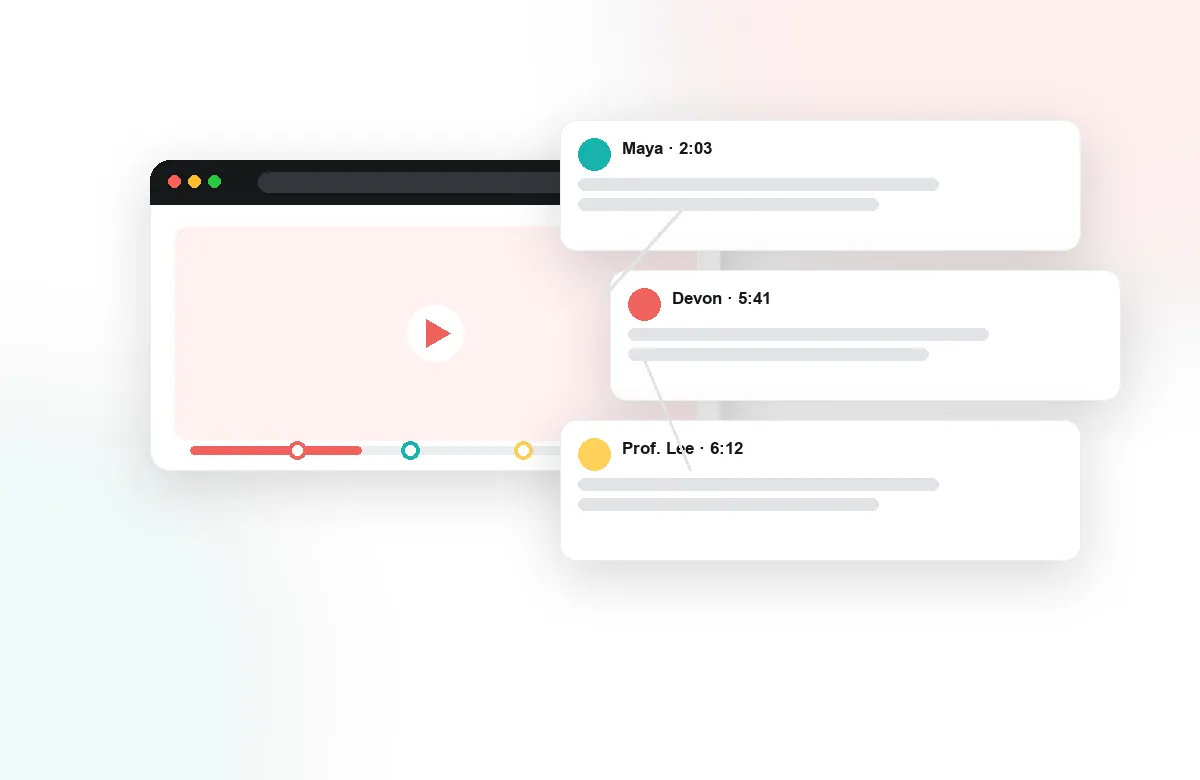
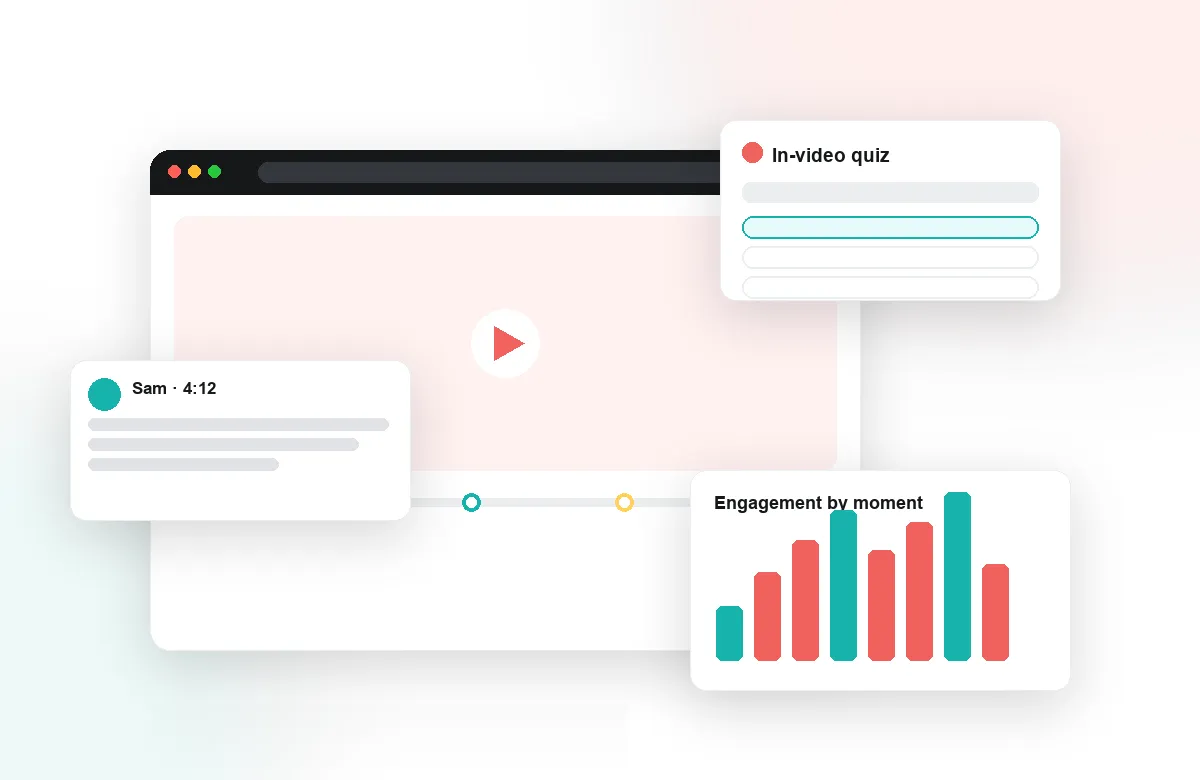
Annoto is a collaboration and engagement layer that lives inside the tools institutions already use — Canvas, Moodle, Blackboard, Brightspace, and Open edX via LTI 1.3, on top of Kaltura, Panopto, Wistia, YouTube, and Vimeo. Time-anchored discussions, in-video quizzes, polls and reactions, notes and AI summaries, reflection points, and attention and comprehension analytics turn a one-way broadcast into a two-way classroom, with completion and gradebook sync closing the loop for instructors.
How we work
We build with educators, not just for them. Institutions worldwide shape our roadmap through their courses, their questions, and their research interests, and our team treats pedagogy as an engineering requirement rather than a marketing theme. That is also why Lumo, our AI copilot, was purpose-built for education — designed to support teaching judgment, never to replace it.
If this mission resonates, there are several ways to get closer to it: explore the product tour to see the layer in action, read the customer stories to see how institutions like yours adopted it, or reach out directly. We are educators, engineers, and researchers who think the next decade of learning video should look nothing like the last one — and we would love your help proving it.
The principles behind the product
Three commitments shape what we ship. First, meet learning where it already happens: Annoto integrates into the LMS and the player instead of asking institutions to move content or adopt another destination, because a tool that interrupts existing workflows never survives a full semester. Second, prefer evidence to impressions: every feature has to produce a signal an instructor can act on, not just an activity students click through. Third, respect the classroom's time: setup measured in minutes, defaults that work without configuration, and nothing that demands a new habit before it gives something back.
Who we work with
The mission plays out in very different classrooms. Research universities such as NYU, Georgia Tech, and Washington University in St. Louis use Annoto across large lecture courses where scale makes individual attention hardest. The University of Padova and Amsterdam University of the Arts bring it into European degree programs, from seminar-style teaching to studio critique. Weber State, Southern Utah University, Florida State, Nova Southeastern, and Bentley University run it in blended and online programs, and CampusIL applies the same layer to national-scale open courses. Different contexts, same test: does video become a place where learning is visible?
What success looks like
We measure ourselves the way we ask educators to measure video: by behavior, not attendance. Success is a discussion thread that answers next year's question before it is asked, a quiz that catches confusion while there is still time to fix it, an instructor who redesigns a lecture because the data showed where attention broke. When those moments become routine across a course, a department, and eventually an institution, passive video has actually become active learning rather than a slogan about it.
That is also the standard we hold for what comes next. As AI takes on more of the drafting work in education, we intend to keep the same order of operations we started with: the technology proposes, the educator decides, and the learner gets a course that noticed them.