AI Generated Quizzes: Fast to Create, Easy to Get Wrong
Type quiz into any AI tool and seconds later you have ten multiple choice questions, four options each, answer key included. For an instructor who has spent evenings writing assessment items by hand, it feels like a superpower. Search data says teachers agree: AI quiz generator queries have climbed all year.
The enthusiasm is justified and so is the caution. A quiz is not a pile of questions. It is a measurement instrument, and an instrument built in ten seconds measures whatever it happens to measure.
What AI genuinely does well
Credit first. Models are excellent at the mechanical layer of quiz writing: producing variations of a question so each attempt differs, drafting plausible distractors, rephrasing an item at a lower reading level, converting a factual question into a scenario. They are tireless at volume, which matters when you want a question bank large enough for retakes and practice. Used this way, AI gives hours back. The quality problems start one level up.
The three failure modes to catch
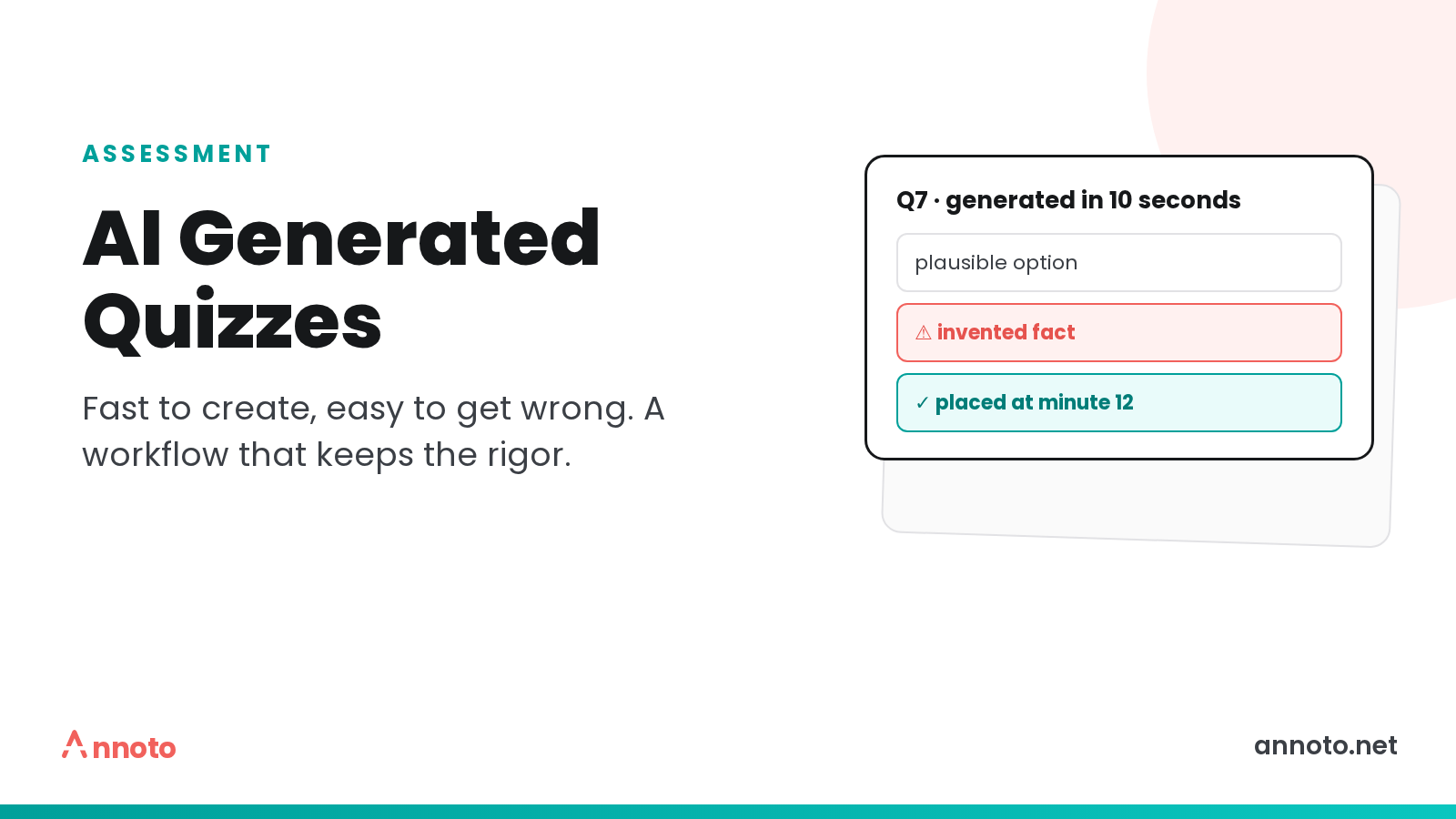
Invented facts. Models confidently generate questions about things that are almost right: a date shifted, a name invented, a mechanism from a neighboring concept. A quiz that tests recall of an invented fact actively harms learning, because students rehearse the error. Every generated item needs a human pass against the source material.
Surface recall. Left unguided, generators default to definition questions, because definitions are the easiest pattern in the text. A quiz of ten definitions measures memory of vocabulary, not understanding. The fix is in the instruction: ask for questions that require applying the concept, predicting an outcome, or spotting the error in a worked example. We covered the craft of this in 7 ways to verify understanding.
Misaligned difficulty. AI has not met your students. It does not know that your cohort aces notation and struggles with units. Difficulty calibration comes from your data, not the model's priors, which is where engagement analytics earn their keep.
Where the question lives matters as much as what it asks
Here is the step most AI quiz workflows skip entirely: placement. A quiz delivered as a separate activity after the lecture measures what survived until the end. A question placed inside the video, at the exact minute the concept is taught, does something different: it interrupts passive watching, forces retrieval while the context is live, and catches misunderstanding before it compounds. The research case is laid out in In Video Quizzes: Turning Passive Watching Into Active Recall.
Placement is also where your watch data makes AI output smarter. Replay spikes and drop offs show precisely where a cohort struggles. Those minutes are where a comprehension check belongs. The confusion picks the spot, the AI drafts the question, the instructor decides. That division of labor uses each party for what it is good at.
A workflow that keeps the rigor
In practice, a reliable AI quiz pipeline looks like this. Generate from the actual course material, not from a topic name, so the items stay inside what was taught. Ask for application level questions explicitly. Review every item against the source, cutting anything you cannot verify in thirty seconds. Place the survivors at the moments the watch data flags, inside the player where retrieval happens in context. Then close the loop: if everyone gets an item right in three seconds it is decoration, and if most of the cohort misses it the video segment needs work, not just the students. With gradebook sync, results flow to the LMS on their own, so the loop costs no admin time.
Ten seconds to generate, ten minutes to verify and place. The ten minutes is where the pedagogy lives, and it is still a fraction of what manual authoring used to take.
Takeaways for educators
Use AI for what it is good at: volume, variation, and distractors. Keep humans on what they are good at: truth, difficulty, and judgment. Ask for application questions or you will get definitions. Verify every item against the material, because one invented fact rehearsed by a whole cohort outweighs the hours saved. And place questions where learning happens, inside the video at the moment of instruction, guided by where the replays cluster. The tools got fast. The craft is still yours.