Why Annoto

Why Leading Institutions Choose Annoto

Built-in LMS video tools stop at playback. Standalone quiz tools pull learners out of context. Annoto is the only layer that does both, where your learners already are.
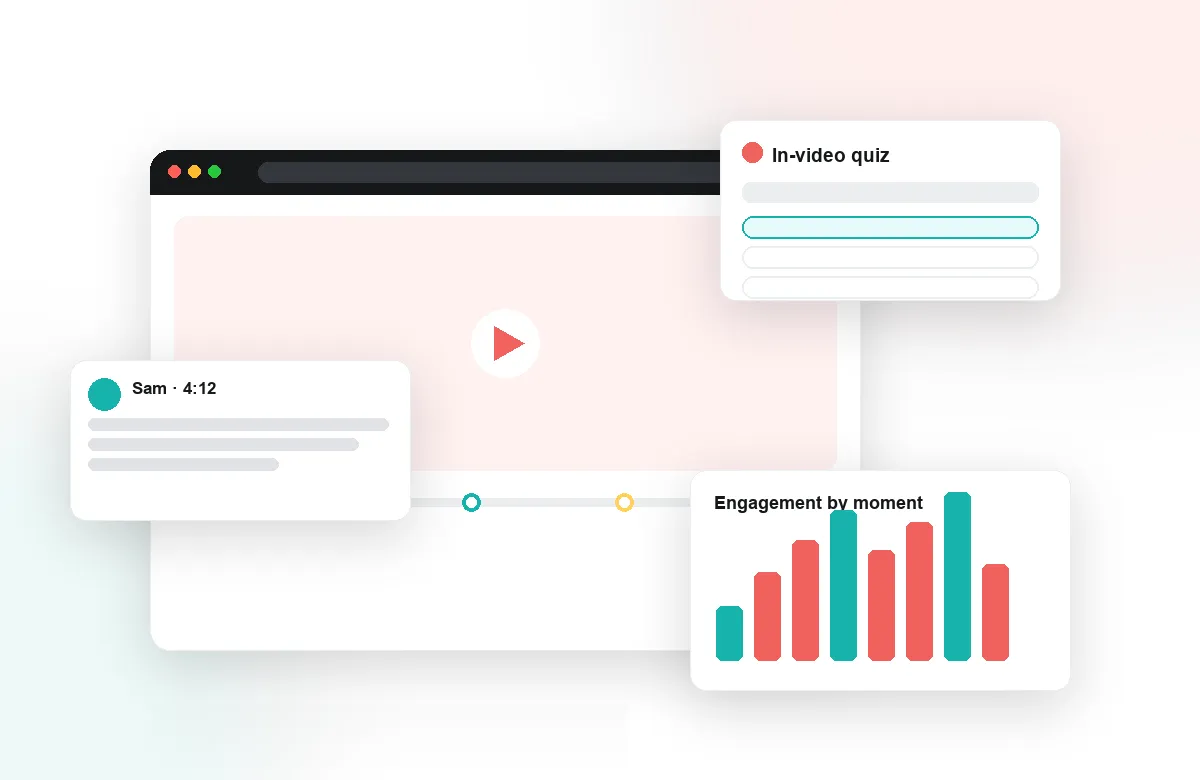
One Annoto layer combining discussion and in-video assessment where learners already watch
Learn more: LMS-native collaboration, not another bolt-on tool
Why Annoto

LMS-native collaboration, not another bolt-on tool

Most video engagement tools are destinations: another site, another login, another place course content goes to get lost. Annoto takes the opposite position. It is a layer, not a destination — it appears inside the course, on the video, at the moment of learning, and disappears into the workflow instructors and students already have. That architectural choice is the honest answer to the question this page exists for: why Annoto?

Inside the course, not beside it

Annoto runs inside Canvas, Moodle, Blackboard, Brightspace and Open edX through LTI 1.1 or 1.3, and on portals, catalogues and custom platforms through the JavaScript SDK. Students never leave the course or manage another account; instructors never export and re-import anything. Completion and gradebook sync writes results where grades already live, and the REST API and webhooks carry the same data where there is no gradebook. Bolt-on tools ask your institution to change its workflow around the tool. A layer that installs into the workflow you already have is the one that actually gets used.

Your video stack stays your video stack

Annoto works on top of Kaltura, Panopto, Wistia, YouTube, and Vimeo, so nothing gets re-hosted, re-encoded, or duplicated into a proprietary silo. The media pipeline your institution already invested in keeps working exactly as before — Annoto adds time-anchored discussions, in-video quizzes, polls and reactions, and notes with AI summaries on top of it. If you ever leave, your video is precisely where it always was.

Depth built for education

Generic commenting widgets stop at conversation. Annoto continues into pedagogy: reflection points that pause for thinking, peer review anchored to timestamps, attention and comprehension analytics that show what landed, analytics export for institutional research, and Lumo — an AI copilot purpose-built for education, not adapted from a consumer product. These are the pieces a tool only grows when classrooms, not creators, are its actual users.

Institutions worldwide have made this comparison before you, usually against a familiar shortlist of bolt-on alternatives, and the deciding factors repeat: native beats separate, layers beat silos, education-built beats general-purpose. The sections below walk through the comparison in detail — evaluate it skeptically, pilot it in a real course, and let your faculty and students cast the deciding vote.

Compared with your LMS's built-in tools

Every LMS ships a discussion forum and a quiz engine, and the honest question is why those are not enough. The answer is location. A forum thread about a lecture lives in a different tab from the lecture; by the time a student writes "the part about enzymes confused me," the class has to guess which part, and most never post at all. A quiz built in the LMS runs after the video ends, when the moment to catch a misunderstanding has already passed. Annoto moves both to the timeline itself: the question sits at the second it refers to, and the quiz fires while the concept is still on screen. Built-in tools are fine containers for text; they were never designed to make the video itself the place where learning happens.

Compared with standalone quiz apps

Interactive-video quiz apps do put questions on a timeline, but they solve one feature, not a workflow. Most require importing or re-hosting video in their own environment, keep their own rosters and logins, and hand grading back to the instructor as a spreadsheet to reconcile. They also stop at assessment: no time-anchored discussion, no notes or summaries, no peer review, no attention analytics to explain why a question failed. An institution that adopts one typically ends up running three disconnected systems — video platform, quiz app, LMS — and manually carrying data between them each term. Annoto folds assessment, conversation, and analytics into one layer that reads rosters from the LMS and writes grades back to it without an export step.

The checklist evaluations converge on

Institutions that formalize the comparison tend to score the same criteria. Does it work across every LMS and video platform the institution runs, or only the flagship pairing? Do results reach the gradebook automatically? Can institutional researchers get the data out through CSV or an API? What does a student have to do before their first comment — and does the answer involve creating an account? How much training does an average instructor need before the tool stops being a project and starts being a habit? Annoto's answers to those questions are the reason this page exists, and they are checkable in an afternoon: the integrations are listed above, and docs.annoto.net documents the rest.

What a deciding pilot measures

The comparison stops being theoretical once one real course runs on each candidate. Give the pilot a term, then look at three things. Adoption without pressure: did students keep commenting and answering after the novelty week? Instructor cost: how many hours did setup, grading, and moderation actually take, and where did they go? Decision-grade data: can you show a department head where attention dropped and comprehension broke, or only a count of clicks? Tools that survive that trio tend to survive procurement. Institutions from research universities to national online platforms have run exactly this exercise before choosing Annoto, which is why the customer stories on this site read less like endorsements and more like pilot write-ups.

The cost nobody budgets for

One factor deserves naming because it rarely appears in feature matrices: the ongoing price of separateness. Every extra destination costs a fraction of the class at each handoff — some students never make the jump, support tickets multiply, and instructors quietly stop assigning what students quietly stop using. A layer that lives where the course already lives pays that tax once, at integration time, instead of every week of every term. Over a few academic years, that difference compounds into the adoption gap between tools that get piloted and tools that get renewed.

The Annoto difference

From passive video to active learning

Same videos, same LMS: with Annoto, learners take part instead of just watching.

Without Annoto

Video that talks at learners

Passive: learners watch, then forget. Zero interaction.
Invisible: no view into who understood, struggled, or dropped off.
Disconnected: discussion lives in a separate forum, away from the video.
Unverified: no audit-ready proof of substantive interaction.
One-directional: the video talks at students, never with them.
With Annoto

Video that learns with them

Active: in-video quizzes, discussion & reflection, right on the timeline.
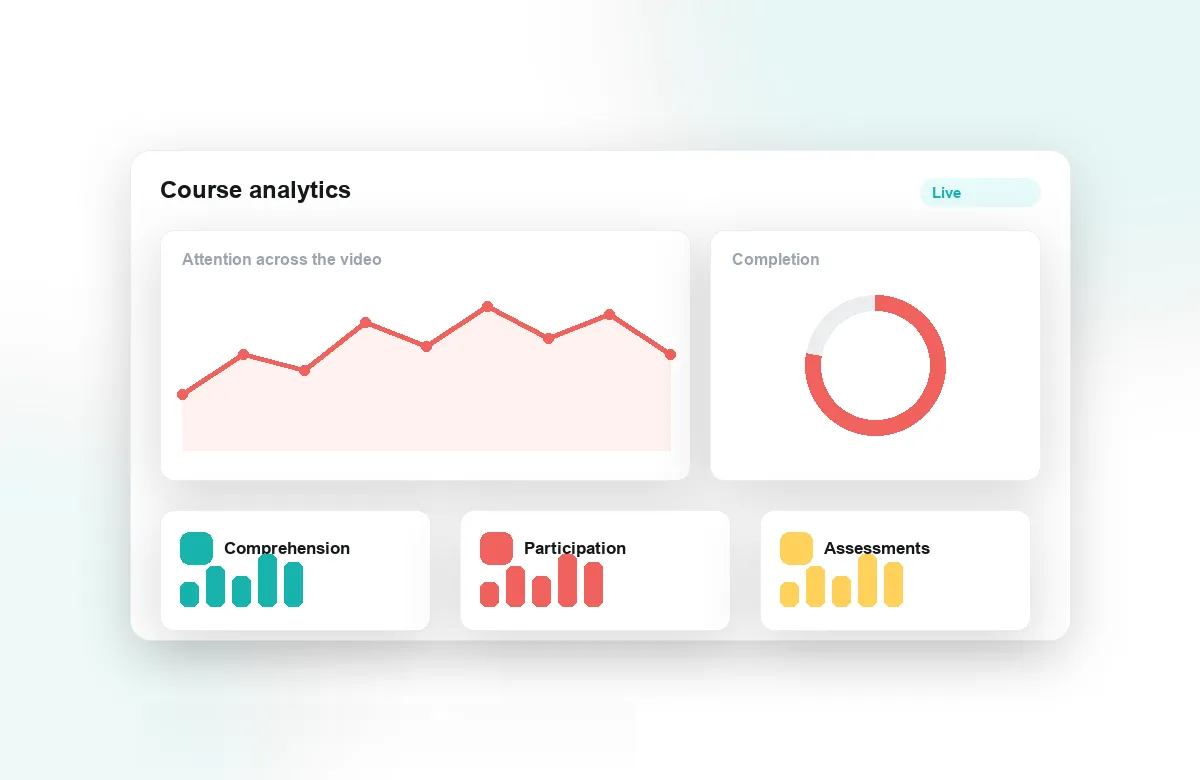
Measurable: attention, comprehension & completion, in real time.
In-context: conversation happens where students already watch.
Compliant: an automatic, audit-ready RSI record for accreditation.
Two-way: every video becomes a conversation, not a broadcast.
Capability
Annoto
LMS Video Tools
Quiz Tools
Works inside your LMS, no redirect
Works with any video platform
Partial
In-video discussion & collaboration
In-video quizzes with gradebook sync
Basic
Moment-level engagement analytics
Views only
Scores only
AI copilot for learning design
✓ Lumo
RSI-compliant interaction evidence
One Platform, Not a Stack of Tools

Why buy four tools when one does it all?

GoReact for video assignments. PlayPosit for quizzes. VoiceThread for discussion. Canvas Studio for hosting. Each covers a slice, and each is another license, integration, and login for students. Annoto delivers all of it natively inside your LMS: a complete video learning platform, so your budget buys outcomes, not overlap.

One license, not four
Consolidate peer review, quizzes, discussion, and analytics into a single platform. One contract, one vendor. No stacking of per-tool subscriptions.
No integration tax
Annoto installs once, over LTI 1.1 or 1.3 in an LMS or as a single script tag anywhere else, and runs on the video you already have: no migrations, no redirects to external sites, no separate IT project per tool.
Faster ROI, higher adoption
One place for students and faculty means faster rollout, less training, and higher usage, so the engagement you paid for happens.
Feature / Use Case
Annoto
GoReact
PlayPosit
VoiceThread
Canvas Studio
Use Cases
Video Assignments
✅ Self-reflection, instructor feedback, group critique and peer review
❌ Not supported
⚠️ Partial
⚠️ Partial
❌ Not supported
Skill Assessment
✅ Rich, customizable, rubric support
✅ Supported
❌ Not supported
⚠️ Limited
❌ Not supported
In-Video Quizzes
✅ Advanced: versioning, real-time changes, actionable analytics, easy creation
❌ No
✅ Supported
❌ No
✅ Basic
Social Learning / Collaboration
✅ Threaded video discussions, badges, notifications, managed comments
✅ Basic (no notifications / comment mgmt)
Self-Learning Tools
✅ Notes, 1:1 chat
❌ No
✅ Basic
❌ No
❌ No
Guided Watching (one-way moderator comments)
✅ Yes
❌ No
❌ No
❌ No
❌ No
Learning Analytics
✅ Deep insights at all levels
❌ No
❌ No
❌ No
❌ No
Mastery-Based Video Progression
✅ Yes
❌ No
❌ No
❌ No
❌ No
Custom Learning Journeys
✅ Yes
❌ No
❌ No
❌ No
❌ No
Capabilities
Plug-and-play at site / course / video level
✅ Yes: advanced real-time video learning design platform
❌ No
❌ No
❌ No
❌ No
Analytics (User, Video, Course)
✅ Deep insights at all levels
❌ Poor
❌ Poor
❌ None
⚠️ Basic
Admin Dashboard
✅ Enterprise-wide
⚠️ Department-level
⚠️ Department-level
⚠️ Department-level
⚠️ Basic
Video as Comment (self-camera + screen recording)
✅ Audio/video timestamped comments
✅ Supported
❌ Audio only
✅ Supported
⚠️ Text only
LMS Course Copy
✅ Blueprint & one-to-one copy
❌ No
✅ Basic (one-to-one copy)
❌ No
❌ No
Fast-Forward Restriction
✅ Yes: optional/mandatory controls, activity & reflection points
❌ No
✅ Basic
❌ No
✅ Basic
Assessment Criteria / Rubrics
✅ Fully customizable assessment engine
❌ No
❌ No
❌ No
❌ No
Dynamic In-Video Content Editing
✅ Add & edit interactions in the LMS with no re-publish
❌ Static content only
❌ Requires re-authoring
❌ Static assignments only
❌ No post-publish editing
Integration
Runs natively inside the LMS
✅ Native (Canvas, Kaltura, D2L, Blackboard, Moodle…)
❌ Redirect to external site
✅ Native Canvas
Kaltura Integration
✅ Full: SSO, grading, rubrics
❌ No
❌ No
❌ No
❌ No
No content migration needed
✅ Yes: works with existing videos
❌ No
❌ No
❌ No
❌ No
Video Source Support
✅ All sources (YouTube, Vimeo, Panopto…)
⚠️ Limited
⚠️ Limited
⚠️ Limited
❌ Upload only
Mobile Support
✅ Full: LMS native apps & browsers
⚠️ Browser only; iOS Safari limited
⚠️ Browser only; no app
⚠️ Native apps only; not browser-optimized
⚠️ Via Canvas app only

Everything above is built in. No add-ons, no plugins. That is the difference between a feature and a platform.

The Difference

Four Reasons Buyers Pick Annoto

Video engagement analytics illustration

Students Never Leave the Course

Learners never leave the course. Annoto lives inside Canvas, Moodle, Blackboard, and Brightspace: grades, rosters, and SSO included.

In-video discussion illustration

Keep the Video Platform You Already Use

Kaltura, Panopto, MS Stream, YouTube, Vimeo, or your own player: one layer over all of them. Keep your video where it is.

Video insights dashboard illustration

Less Manual Work for Faculty

The first AI copilot purpose-built for education: quiz generation, feedback, and competency insights, with educators in control.

Assessment criteria illustration

Built to Clear Procurement and Accreditation

FERPA, GDPR, WCAG 2.1 AA, LTI 1.3, plus documented RSI evidence for accredited online programs.

Proof

Results You Can Take To Procurement

Institutions worldwide, 3M+ learners, and engagement rates that hold up in accreditation reviews.

Read Customer Stories →
Skills assessment happening inside a course video
Compare Annoto

How Annoto compares

Side-by-side with the tools institutions usually weigh against us — what each one is built for, and where an engagement layer fits.

FAQ

Frequently Asked Questions

How is Annoto different from the video tool built into our LMS?
Annoto adds true in-video interaction (quizzes, discussion, peer review, and analytics) on top of any video, instead of just hosting or playing it, and it works across Canvas, Moodle, Blackboard, and Brightspace.
Why not just use a standalone quiz tool?
Annoto keeps assessment and discussion inside the video and inside your LMS, with grades flowing to the gradebook. No separate platform, no redirect, no lost context.
Do we have to move our existing videos?
No. Annoto overlays the video you already run (Kaltura, Panopto, YouTube, Vimeo, and more); no migration required.
What makes Annoto a safer long-term choice?
It runs natively in your LMS and just as well without one, it is media-agnostic, it is AI-powered with Lumo, and it is compliance-ready (FERPA, GDPR, WCAG 2.1 AA, LTI 1.1 and 1.3).

Compare Us On Your Own Content

The fastest way to evaluate Annoto is to see it live in your LMS, on one of your videos.

Book A Demo