What Is Annoto? The In-Video Engagement Layer, Explained

Most course video is a one-way street. An instructor records a lecture, uploads it to the LMS, and hopes students press play. But watching is not learning. Learners drift, skip ahead, or leave the tab open while their attention wanders elsewhere, and the instructor has no way to know. We built Annoto to close that gap without asking anyone to abandon the video they already use.
The Problem With Passive Video
Video became the default medium for online and hybrid courses, yet the experience barely changed from the days of the lecture hall. There is rarely a moment where a student has to think, respond, or commit to an answer. Comprehension goes unmeasured until a later quiz or exam, by which point the lecture is long over. For institutions, that creates two headaches at once: students disengage, and there is no documented record of the interaction that accreditors and regulations increasingly expect.
The Layer Annoto Adds
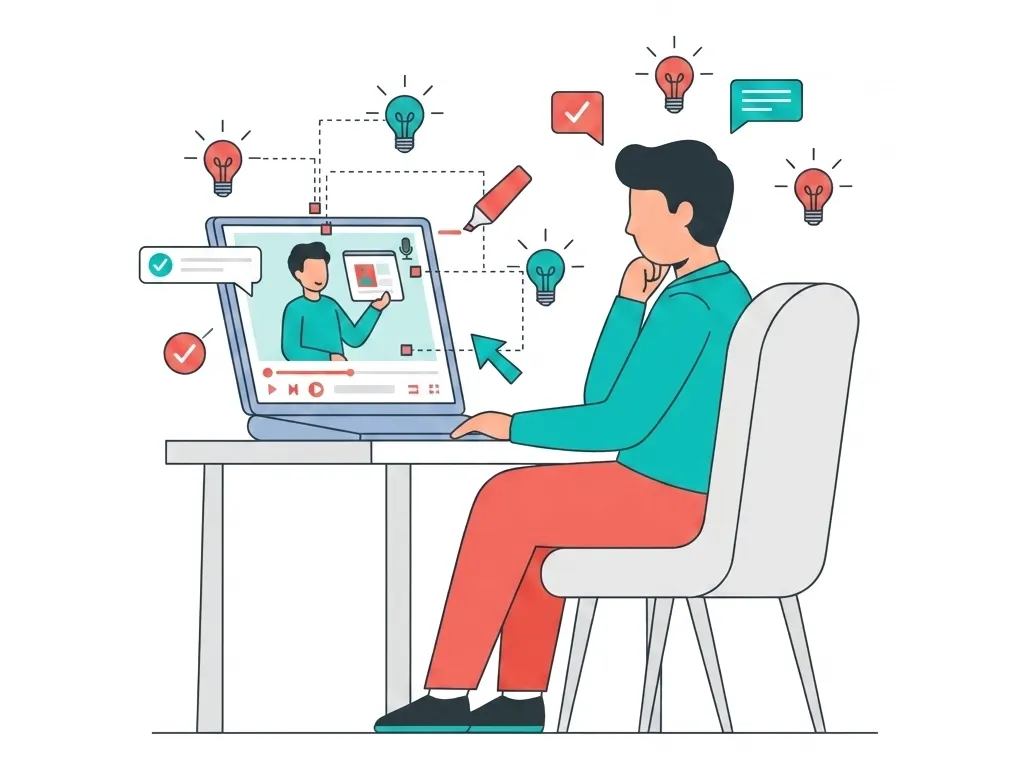
Annoto is an in-video engagement layer. Instead of replacing your video, we sit on top of it and turn the timeline into an interactive workspace. The content instructors already have in Kaltura, Panopto, YouTube, or their LMS becomes active learning with no re-recording. On any video, learners can:
- Answer in-video quizzes that check comprehension at the exact moment a concept is taught
- Post in-context comments and discussion tied to the second of the timeline they are watching
- Complete peer review and reflection points that ask them to articulate what they understood
Our AI copilot, Lumo, auto-generates in-video quizzes and scaffolds them across Bloom's taxonomy, so building an interactive lesson takes minutes rather than hours.
Inside Your LMS, With the Data to Prove It
Annoto connects to Canvas, Moodle, Blackboard, and Brightspace through one-click LTI 1.3, so there is nothing for IT to install and nothing new for students to log into. Grades from in-video quizzes sync straight to the LMS gradebook. Every question answered and comment posted also documents Regular & Substantive Interaction (RSI), giving your institution the compliance trail it needs. Behind the scenes, we surface analytics that passive video can never provide, including attention, comprehension, and completion, broken down by learner and by moment in the video.
Passive watching becomes active collaboration, assessment, and insight, on the video you already teach with.
That is why institutions worldwide, including NYU, Florida State, Georgia Tech, and the University of Padova, use Annoto to make their video count. If your courses run on video, the engagement layer is the missing piece.
What Getting Started Actually Looks Like
Because Annoto arrives through LTI, getting started is closer to flipping a switch than running a migration project. An administrator connects the platform to the LMS once — LTI 1.3, with LTI 1.1 still supported — and instructors simply find the engagement layer waiting on their course video. A sensible first step is one existing lecture: turn Annoto on, let Lumo draft a set of quizzes to review and edit, and seed the discussion with a single question you would normally ask in class.
From there, the layer grows with your teaching. Polls and reactions give you a quick pulse check before an exam. Notes and AI summaries turn each video into revision material students actually return to. Group chat keeps a section's conversation in one place, and the activity feed means new questions reach the instructor without anyone refreshing a page. Because the layer is player-agnostic, the same tools appear whether a video lives in Kaltura, Panopto, Wistia, YouTube, or Vimeo.
Give it two weeks and the analytics start paying rent: you will see where attention dips, which moments draw questions, and who has fallen behind. Export the data as CSV or pull it through the API if your institution keeps its own dashboards. The full setup guides live at docs.annoto.net; a single pilot course this term is usually all it takes to make the case.
Keep reading
Related: Annoto for Open edX: The Engagement, Assessment, and Insight Layers Vi, Accessibility Is Engagement: UDL and Inclusive Video Learning, and Talpiot MOOC: Substantive Group Discussion At Scale On Open edX.
See Annoto inside your LMS: Canvas, Moodle, Blackboard, and Brightspace.